
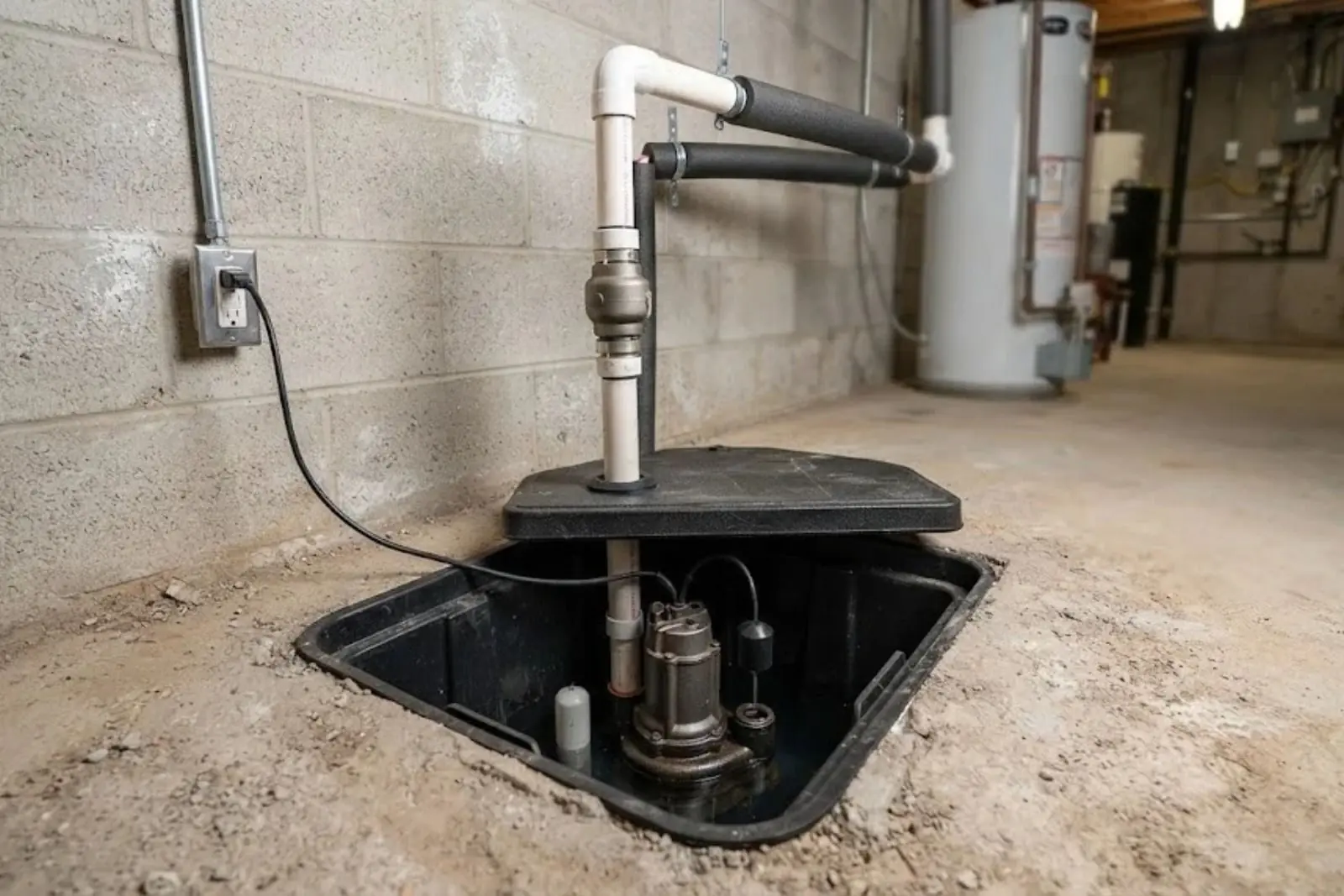
A sump pump system collects water in a pit below the basement floor and pumps it out of the house. A good system has four parts: a pit, a pump, a check valve and a discharge line. A battery backup is the fifth part, and it is the one that matters when the power goes out in a storm.
This guide walks through installation, what each part does and what to ask. If you want a plan for your basement, call (973) 488-5410.
How the system works
Water collects in the pit, a float rises and the pump turns on. It pushes water up the discharge pipe and out of the house. The check valve keeps water from falling back into the pit after the pump stops, which keeps the pump from cycling constantly.
Pump types
| Type | How it works | Notes |
|---|---|---|
| Submersible | Sits inside the pit, underwater | Quieter and common in homes |
| Pedestal | Motor sits above the pit | Easier to service, louder |
| Battery backup | Second pump on a battery | Works when the power fails |
| Water powered backup | Uses water pressure to pump | Needs enough supply pressure |
The installation steps
- Locate the pit. Choose the lowest point where water gathers.
- Cut and dig. Cut the slab, dig the pit and set the basin.
- Set the pump and valve. Install the pump, check valve and float.
- Run the discharge. Route the pipe out of the house to a place that is allowed.
- Add a backup. Install a battery or water powered backup pump.
- Test. Fill the pit with water and confirm that the pump starts and the water leaves.
Where the water goes
Local sewer rules generally keep stormwater out of the sanitary sewer, so a sump discharge usually should not connect to the house drain. In Montclair, we ask where each discharge is allowed to go before we plan it. We also route the pipe so it does not freeze or drain back toward the house.
Storms and why backups matter
In early September 2021, the remnants of Hurricane Ida flooded basements across northern New Jersey. Storms like that knock out power as well as flood basements, so a pump without a backup can fail at the worst time. A battery backup is the part we recommend most.
If the basement is wet in several places, we may suggest pairing the pump with basement waterproofing drains.
Choosing pump size and features
Pump size depends on how much water the pit receives and how high the water has to be lifted. A plumber looks at the depth of the pit, the height of the discharge and the amount of water that enters in a storm. A pump that is too small will fall behind, and one that is too large will cycle on and off.
Features worth asking about include a switch type that resists sticking, a check valve that does not slam, and an alarm that sounds if the water rises too high. A cast iron or stainless body tends to last longer than plastic.
Maintenance after installation
Tests take five minutes and tell you whether the system will work when a storm arrives. A pump that has not run for months can stick, and a quick test frees it.
- Test the pump a few times a year with a bucket of water.
- Check the discharge outlet outside for blockages and ice.
- Test the battery backup and replace the battery on schedule.
- Clean the pit if debris collects.
- Replace an older pump before it fails.
Discharge, check valves and backup power
The discharge pipe should carry water well away from the foundation and not toward a neighbor. A check valve stops water running back into the pit after the pump shuts off. Without it, the pump restarts more often and wears faster.
A battery backup or a water powered backup keeps the system working in a power cut, when storms are at their worst. Size the battery for the hours you expect to need.
Questions to ask your installer
Clear answers show a plan. Vague ones mean you should keep asking. See sump pump repair if you already have a pump that is failing.
- Where will the water discharge and is it allowed there?
- Is the pit sized for the pump?
- Does the price include a check valve and an alarm?
- What backup options fit my basement?
- What warranty comes with the pump and the labor?
Signs your pit needs help
A pump that runs without stopping, cycles every few minutes in dry weather or makes grinding noises is warning you. Standing water in the pit after rain, a musty basement and rust on the pump body tell the same story. Test before the wet season, not during it.
Codes and standards behind the work
Pump outlets should be on a GFCI protected circuit as required by the National Electrical Code (NFPA 70), and the discharge must go where local rules allow.
Next steps
See sump pump repair for service and replacement. We serve Montclair and Glen Ridge, and the service area page lists the towns we cover.
Sump pump installation questions
Deep enough for the pump and float to work. A plumber sizes it for your basement.
If power outages and storms coincide, yes. It keeps the pit pumping when the grid fails.
Local rules generally keep stormwater out of the sanitary sewer. We check where yours may discharge.
Often a day for a new pit and pump, longer for a drain system.
Submersible pumps are quieter than pedestal types.