
Active leaks that need a plumber now
Water that you can see spreading is an emergency, and water that you can only hear is nearly as urgent. A pipe that is leaking inside a wall or ceiling keeps soaking insulation and framing out of sight. By the time the paint bubbles, the damage has usually been building for a while.
If you can reach the main shutoff, close it, then open a faucet at the lowest point to relieve pressure. Call (973) 488-5410 and tell dispatch where the water is showing up.
Signs of a hidden leak
Hidden leaks leave clues long before they cause a flood. A few of them show up on the water bill, and others show up in the house itself.
A bill that climbs
Usage that rises with no change in habits can point to a leak that runs day and night.
The meter moves with everything off
A moving meter while every fixture is closed is a direct sign of a leak.
Stains and soft spots
Brown rings on ceilings, bubbling paint and soft flooring mark where water is reaching.
Sounds and smells
Hissing or dripping inside walls, or a musty odor in a closed room, suggests moisture.
Warm floor patches
A warm spot in a slab floor can point to a hot water line leaking underneath.
Low water pressure
A drop that has no clear fixture cause can mean water is escaping upstream.
How we find a leak without opening walls first
Opening a wall to look is the last step, not the first. We start with the cheapest information and narrow from there. Each step either rules a section out or points to the next one.
- Meter test. We confirm the leak is on your side of the meter by shutting off all use and watching the dial.
- Pressure isolation. We close sections of the system to learn whether the leak is on hot or cold, inside or outside.
- Listening gear. Acoustic equipment picks up the sound of escaping water through floors, walls and soil.
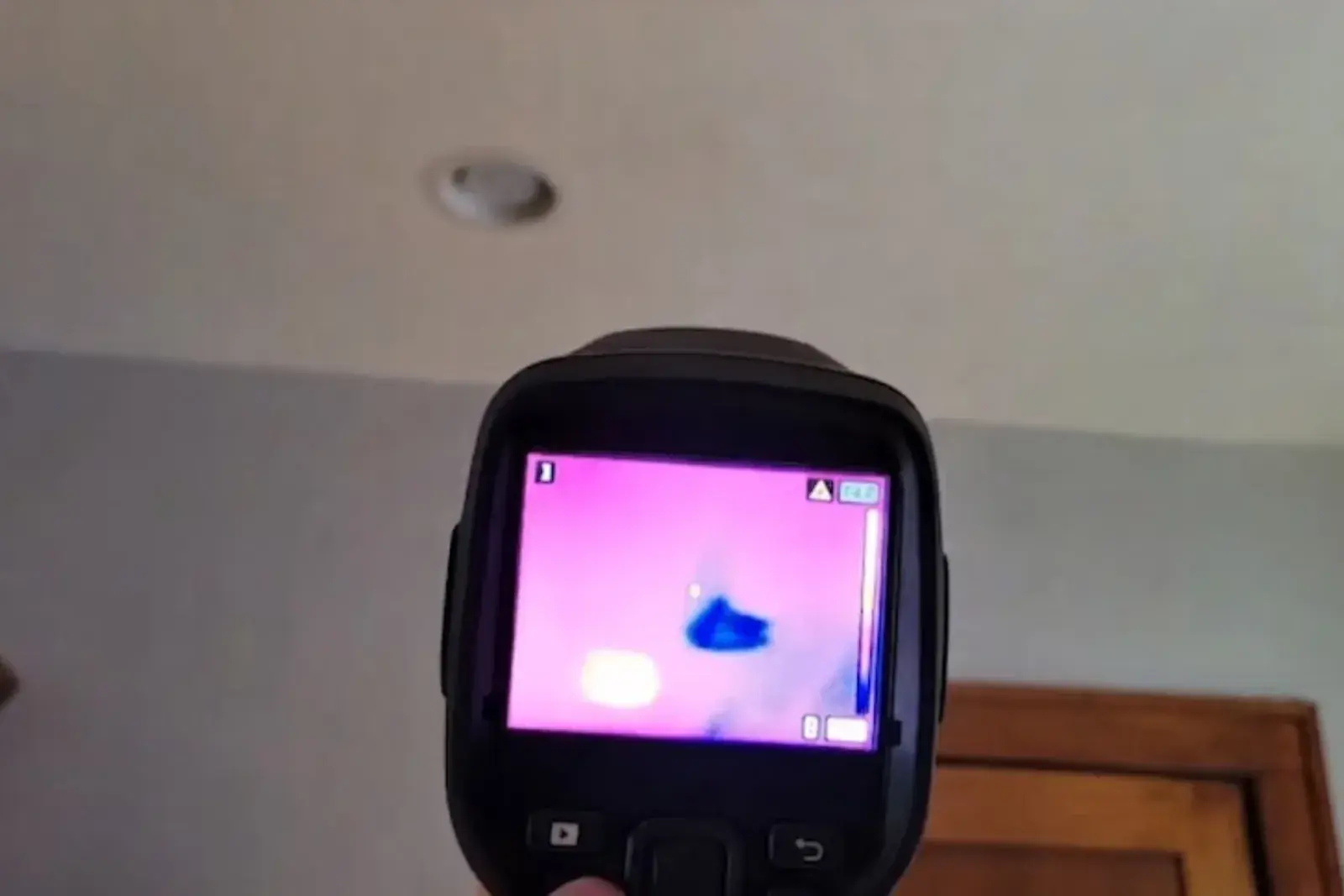
- Thermal imaging. A thermal camera shows temperature differences where water is moving or pooling.
Once the leak is located, you get a clear explanation and a repair price before any cutting starts. Where possible, we choose the smallest opening that lets us repair the pipe.
Leak detection methods compared
No single method works everywhere. The plumber combines two or three to confirm a location before cutting.
| Method | What it finds | Where it works best |
|---|---|---|
| Meter and pressure test | Whether a leak exists and which system holds it | Any home, first step |
| Acoustic listening | The location of pressurized leaks | Slabs, floors and buried lines |
| Thermal imaging | Moisture and temperature changes | Ceilings, walls and radiant heat lines |
| Camera inspection | Cracks and breaks inside drain lines | Drains and sewer lines, see sewer inspection |
What affects the price of leak detection
Pricing depends on how much searching the house needs and how hard the pipe is to reach.
- Size and layout: a small ranch takes less time than a multi-story home with several systems.
- Type of leak: a supply line, a drain line and a heating line each use different methods.
- Pipe location: slab, crawlspace and wall leaks differ in access.
- Repair needed: finding the leak and fixing it are two steps, and we price both.
- Time of day: after hours dispatch involves a crew outside normal hours.
Many policies cover the sudden water damage from a leak but not the cost of repairing the pipe itself, and some cover leak location in specific cases. Ask your carrier early, and call (973) 488-5410 for a price based on your house.
High water bills and hidden leaks in Montclair homes
A bill that suddenly climbs is often the first sign. Before you call, check the toilets with a few drops of food coloring in each tank and watch whether color appears in the bowl without flushing. A silently running toilet is the most common cause of a high bill and is easy to fix.
If the toilets are fine and the meter still runs with everything off, the leak is in a line. We check the service line and the interior piping separately, which keeps the search short. A leak on the street side of the meter is a conversation with the utility, and we can help you document it.
Older pipes and basements in Montclair
Many Montclair houses have a mix of materials from different decades, such as galvanized steel, copper and newer plastic, sometimes in the same basement. Each joins to the next with fittings that can fail. Galvanized pipe corrodes from the inside, and pinhole leaks often appear in the same area as the pipe ages.
When we find several leaks on a failing run, we explain whether a single repair makes sense or whether repiping is the better investment. That conversation depends on the pipe, not on a sales target.
Codes and standards behind the work
Repairs after a leak is found follow the International Plumbing Code for pipe materials and supports, and we advise you on any permit that the repair needs.
Leak detection around Montclair and nearby towns
We serve Upper Montclair, Montclair Center, South End and Frog Hollow. Leak calls also come in from Glen Ridge, Verona, Cedar Grove and Bloomfield.
If the leak turns out to be a failed pipe, our burst pipe repair and water line repair pages explain the next step.
Leak Detection questions from Montclair homeowners
Yes. Dispatch at (973) 488-5410 answers every night, weekend and holiday. Active leaks get priority, and we will tell you how to shut off water while a plumber is on the way.
In many cases, yes. Listening gear and thermal imaging narrow the location so that any opening can be small and targeted.
Close every fixture and check whether the meter still moves. Also test your toilets with food coloring, since a running toilet causes many high bills.
Yes. We explain what we found and what the repair involves, and you approve the price before work starts.
We use acoustic equipment and thermal imaging to locate leaks under a slab. Repair options depend on what we find, and we explain them.
It depends on the policy and on whether the damage was sudden. Ask your carrier before you file, and keep photos and records.
Turn off the main if the leak is active, move belongings away from wet areas, and switch off power to wet rooms if it is safe to reach the panel.