
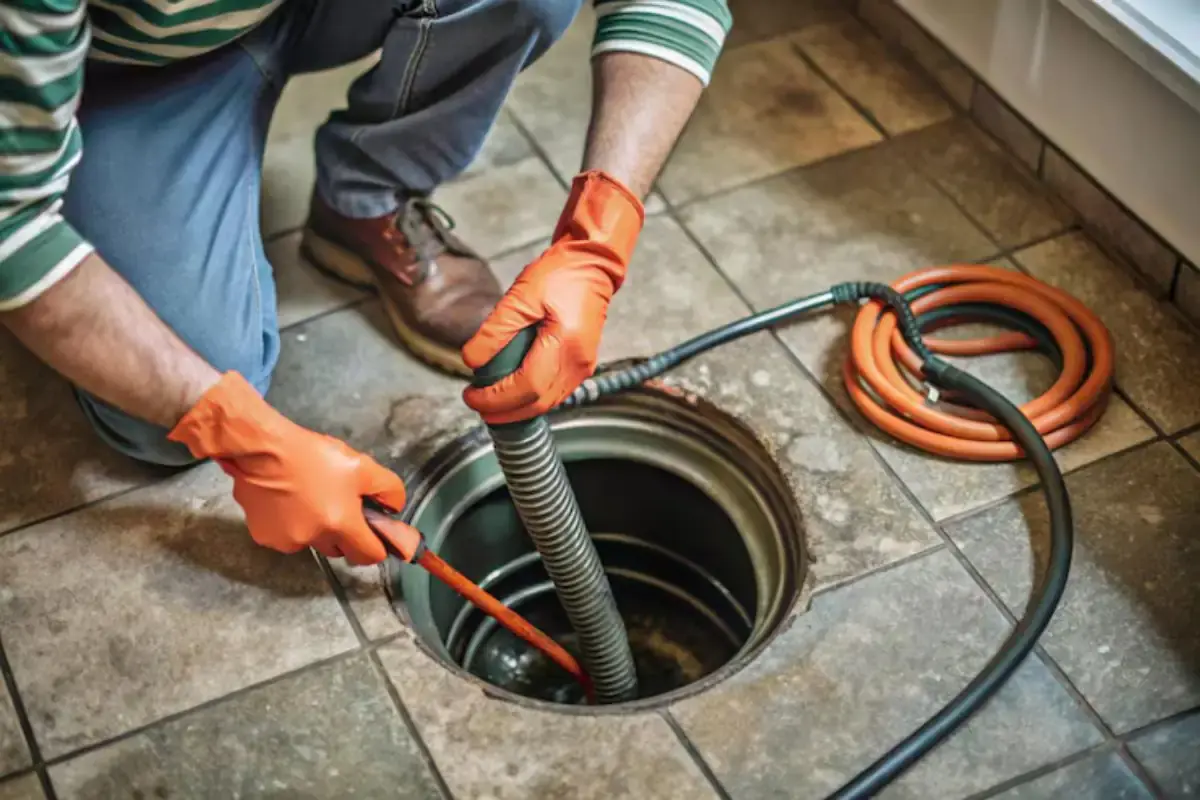
Drains clog for a short list of reasons, and the reason depends on the room. Kitchens clog with grease and food, bathrooms with hair and soap, and main lines with roots, paper and scale. Knowing the cause tells you whether a plunger will help or a camera is needed.
This guide lists the causes by location and what to do about each. If the clog keeps returning, call (973) 488-5410 and we will find out why.
Causes by room
| Where | Common cause | First step |
|---|---|---|
| Kitchen sink | Grease, food scraps and coffee grounds | Hot water and a plunger, then a cable |
| Bathroom sink | Hair, soap and toothpaste | Remove the stopper and clean it |
| Shower and tub | Hair and soap scum | Pull the hair, then a small auger |
| Toilet | Too much paper or wipes | Plunge with a flange plunger |
| Main line | Roots, grease, paper and a damaged pipe | Call for a cable or camera |
Kitchen clogs
Grease is the main culprit. It runs down hot and cools into a waxy layer on the pipe wall, and food bits stick to it. Over months the opening shrinks until water barely passes. A disposal does not prevent this, because it grinds food but does not move grease.
Wipe greasy pans into the trash and run hot water for a minute after washing. If the kitchen drain is slow every few weeks, see drain cleaning for the options.
Bathroom clogs
Hair and soap form a mat that catches more hair. A hair catcher in every shower is the cheapest prevention. Chemical openers can dissolve some of it, but they also damage fixtures and fittings, and they leave a hazard for the next person who works on the drain.
Main line clogs
When several fixtures slow at once, or the basement floor drain backs up, the main line is the likely cause. Roots, paper and wipes are common, and so is a belly in the pipe where waste collects. Cleaning opens the line, but a repeating clog calls for a camera inspection.
Our sewer line cleaning page explains that case, and sewer camera inspection shows what is inside the line.
Older drains and trees in Montclair
Many Montclair houses date to the early 1900s and have drain lines that are rougher inside than modern pipe. Mature trees are common, and their roots reach joints in older clay and cast iron lines. A house with a clean kitchen drain can still back up in the basement because of roots in the line to the street.
Prevention that works
- Keep grease out of drains and wipe pans before washing.
- Use hair catchers in showers and tubs.
- Never flush wipes, even those labeled flushable.
- Run hot water after washing dishes.
- Have a repeating clog inspected with a camera.
Venting and slow drains
A drain needs air behind it to flow. A blocked vent on the roof can make a drain gurgle or run slowly even when the pipe is clear. If several fixtures drain slowly with no clog in sight, a blocked vent may be the cause.
Leaves, nests and ice can block a vent opening. A plumber can check it, but do not climb a roof in winter to look. If the drain problem comes and goes with the weather, mention it when you call.
Bellies and when digging is needed
A belly is a low spot in a buried drain where the pipe has settled. Water pools there and carries waste only part of the way, so solids collect and clog. Cleaning clears the blockage but does not fix the dip, so the clog returns.
A camera shows a belly clearly, and the options range from monitoring to replacing the low section. We explain the choices before any digging. See sewer line repair for how those jobs work.
Prevention habits that work
Put a hair catcher in every shower and tub, wipe grease from pans before washing and keep wipes out of the toilet, whatever the package says. Run hot water for a minute after using the kitchen sink. These small habits stop most household clogs before they start.
A yearly check of the main cleanout and a camera look every few years in an older house catch roots and bellies while they are still cheap to fix.
Chemical cleaners and why we avoid them
Store bought drain openers can eat through old pipe, harm fixtures and splash back on skin. They also leave caustic water standing in the line for the next person to work on. A plunger or a small hand auger is safer for a simple clog.
If a cleaner has already gone down the drain, tell the plumber. It changes how we protect our hands and our equipment.
Codes and standards behind the work
Drain sizing, slope and venting are set by the International Plumbing Code, so a drain that was built to code still needs a clear vent and regular cleaning.
Where to call
We clear drains across Montclair and in Glen Ridge. The service area page lists the towns we serve.
Clogged drain questions
The clog may be partly cleared each time but the pipe wall still has buildup, or there is a belly or root problem.
We advise against it. It can damage pipes and fixtures and put the next plumber at risk.
Roots are a common cause in older lines. A camera shows whether they are in your pipe.
No. It grinds food but does not stop grease from sticking in the pipe.
When water is backing up into tubs or floor drains, or sewage is rising.